

Winter Solstice
Cold seas and weird walks

This winter my reading has led me down a holloway of gothic myth and folklore, stories from ancient times and those more recent, inspired by the British landscape and its inevitable ghosts. Diana Wynne Jones, Margaret Mahy, Amy Jeffs, Alan Garner and the minds behind Weird Walk have been the points on my map.
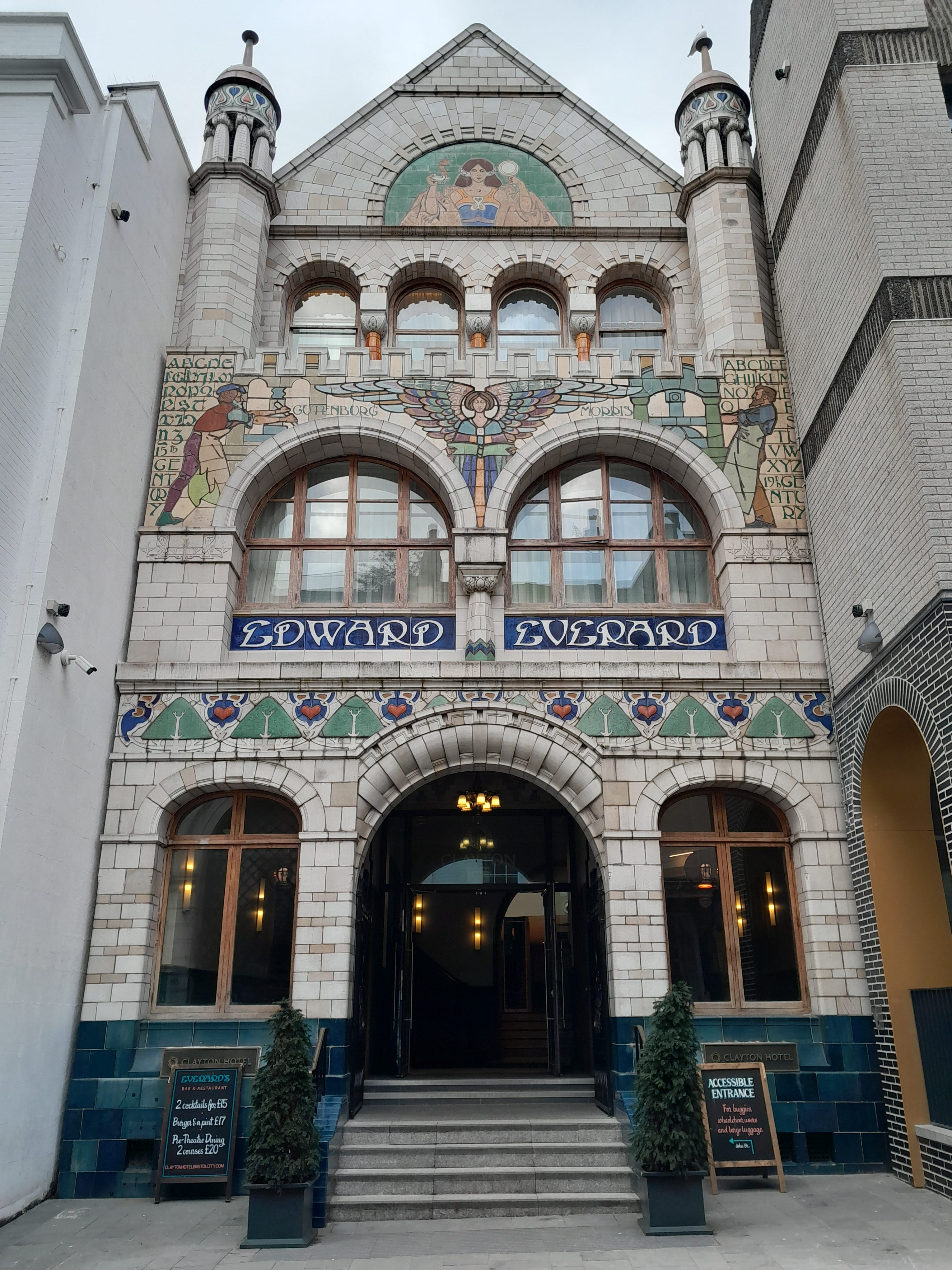
In Bristol earlier this year to see dear friends, we stayed a night at a hotel in the building that once housed Everard’s Printing Works, still with its gloriously Arts and Crafts tiled facade in the historic centre of the city. Nearby we visited Rough Trade where we took a series of bad photos in their photobooth and discovered past editions of a zine called Weird Walk - ‘A Journal of Wanderings and Wonderings from the British Isles’. We chose one each, to read then swap, and one as a present for our friends in London who had us to stay multiple times over our trip. The zines feature folklore, music, geography, history, film - all sorts of links to the land and the weird, images of stone circles and Glastonbury Tor on their covers. Interviews with author of Cuddy, Benjamin Myers, my first introduction to the Abbots Bromley Horn Dance references to The Wicker Man and - my favourite - an article called Pan’s Library about folk horror in children’s literature. Back home and at work at the library I discovered a newly published book by the anonymous creators of the zine. Divided into the four seasons, it gives the locations and history of places associated with the British land and year, whether traditions and rituals like the Ottery St. Mary barrel burning, the incredible Lewes bonfire night, the aforementioned Abbots Bromley Horn Dance (complete with reindeer antlers that date back to the Norman conquest) or places like Oxfordshire’s Uffington White Horse and Dartmoor’s Fernworthy Forest. I’d read this book in bed each night and I can’t explain why but it gave me this perfect sense of relaxation to put me to sleep - a complete washing away of the day or whatever my overactive brain wanted to wheel through my head - to read about places and rituals that people have been attending to for generations, marking the turning of the seasons.
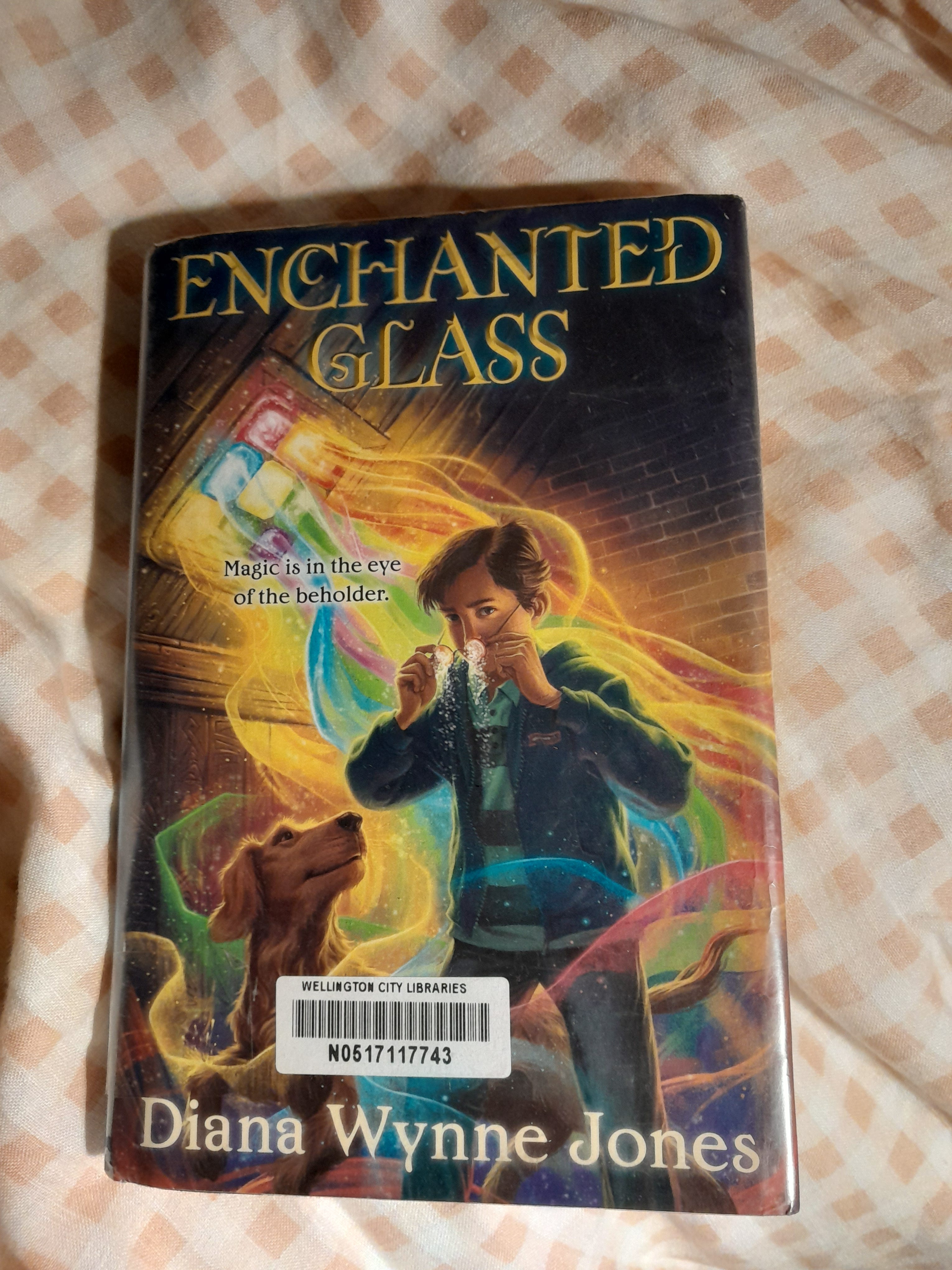
It reminded me of the incredible Enchanted Glass by Diana Wynne Jones and the idea of simple village life with levels of ancient connections to the land and its magic going back generations. In the book, Andrew Hope has inherited his grandfather’s house, land and most importantly - his ‘field of care’. He is in charge of protecting the people and magical beings within this boundary. A boy called Aidan Cain shows up at the house after his Gran dies seeking shelter from some weird dark forces pursuing him, seeking Andrew’s grandfather who knew his Gran. Aidan stays with Andrew while Andrew figures out his new responsibilities, the wacky staff he has inherited from his grandfather and the eccentric local villagers. Aidan goes with Andrew to walk the boundaries of the field of care to strengthen their magic (like the dancing of the boundaries in Black Maria). Aidan is also trying to figure out who or what is eating the vegetables that Andrew leaves on the roof of the garden shed each night, and what the powerfully magic coloured panes of glass in the kitchen door are for; glass that turns out to have a matching set in the old garden shed. Another favourite element of this book for me is the counterparts - something is making people in the village have counterparts that are magical beings and on the side of the sinister Mr Brown rather than Andrew or his grandfather. I first listened to this as an audiobook and I enjoyed it even more recently when I reread it and realised I had missed a couple of things. Reading it again made me realise it’s one of my favourite Diana Wynne Jones novels.
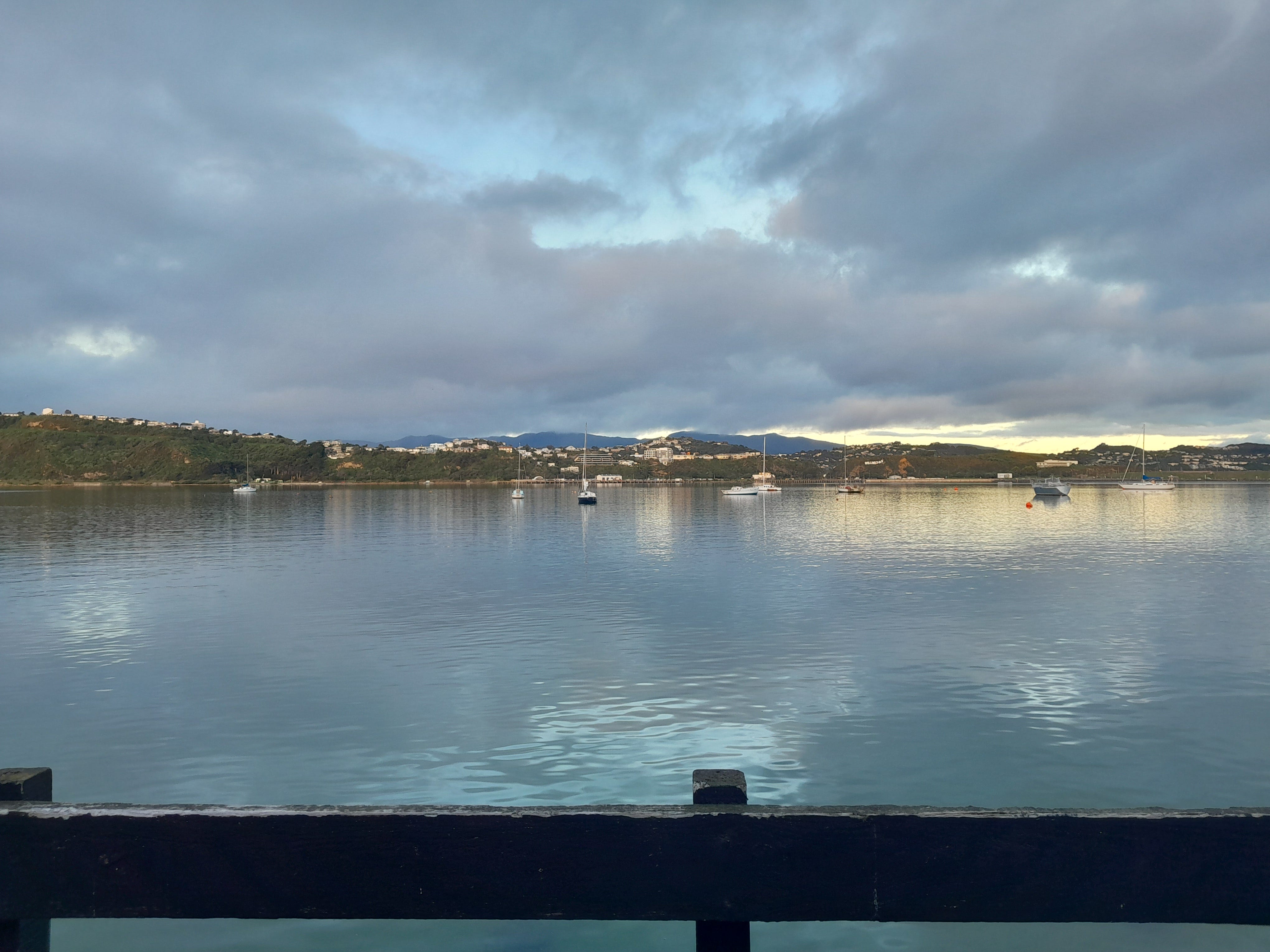
On the winter solstice a group of us met to mark the day with a celebratory dip in the sea. As I was about to get into the car to drive down, a woman walking past saw my towel and excitedly said “I’ve had my solstice swim!” A sunny day but the shade had hit the little bay at Hataitai Beach and the wet wooden planks of the changing shed deck where we waited as our group grew. We each shared something from the past year we wanted to ‘wash off’ with our swim before we descended the wooden steps and waded into the chilly, not quite deep enough water. I turned at some point to see this group of women behind me at various levels of submerged, each letting out her own hoot or howl or scream-laugh. I remember seeing the back of my sister’s neck look blue like her lips as we battled our way out again after dunking our heads under however many times. Back on the deck of the changing sheds we ate chocolate and drank cups of delicious hot tea that Morag brought in a thermos.
A few years ago, Zoe and I managed to swim at Hataitai for the whole year; we were both doing postgrad study and were able to swim during what would now be work hours and follow the tide. We were addicted to the high it gave us. I still remember one of the coldest, roughest days we went out, sitting in the changing rooms afterwards, telling Zoe that I felt completely euphoric. It was the most intense version of the cold-water swimming high that I’ve had before and the memory of it has always made me get in the water at times when it would be much easier to decide not to. It never ceases to amaze me how getting in the sea can pull me out of whatever state of stress or anxiety or depression I’m stuck in. It’s like a reset or, literally, a washing off. Suddenly I’m in this enormous body of water and there it is, stretching out in front of me. Quite often I like to pretend on solo swims that I’m the only person in the whole entire ocean. And it’s a rebalancing of everything, what is and isn’t important.
The night of the solstice we go to the Lōemis Wolf Run, a procession along the waterfront from behind Te Papa to Freyberg Beach, with cyclists and walkers and a band and people in various states of wolf-costuming letting out intermittent howls into the night air. Past Freyberg Pool we see a group of runners gathering with their head torches on about to head out into the night, and, like some kind of fairy procession, glowing coloured orbs are heading down to the beach and into the water - it is a group of swimmers with colourful bright floats in pink and orange lit up against the black expanse of Oriental Bay. All sorts of groups out to celebrate the longest night.
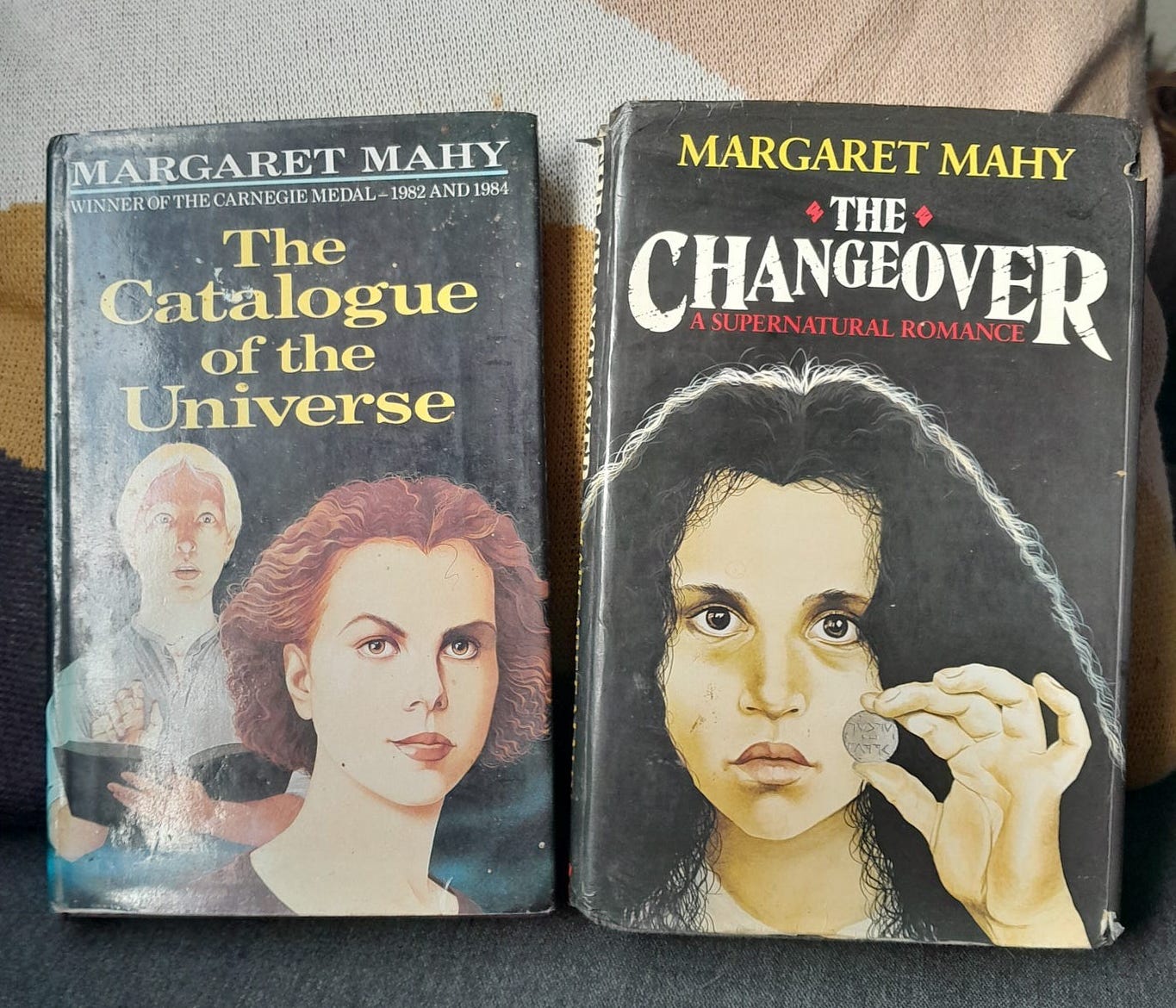
The day of the solstice I sent a message to my Junior Fiction book club and said I was going to start Margaret Mahy’s The Changeover as a fittingly eerie read for Yule. I had just finished reading for the first time Mahy’s The Haunting and I was off down a Margaret Mahy rabbit hole. (I love these obsessive literary rabbit holes I fall down. Currently way down an Alan Garner one as I write; maybe it is an old goblin-infested copper mine in fact). The following day, at one of my favourite little free libraries, the old telephone box on Karaka Bay Road, I found first edition hardbacks of both The Changeover and Catalogue of the Universe. The pages were a bit spotted with foxing and there were cobwebs and dust along the top edges. I imagined them sitting on someone’s bookshelf, then in their garage, for years before being left in the telephone box for me to find. It felt serendipitous and a bit spooky and I was thrilled. I can now say that I think The Changeover is one of the best books I’ve ever read. How does Mahy create the magic she creates, this whole universal other - she is truly a genius - and yet still manage at the same time to make Sorry Carlisle so convincingly hot? I feel like I need to draw a diagram on a whiteboard to explain how I feel about the fact that the same mind that created The Great Piratical Rumbustification created this. Sorry Carlisle: teenage boy/man/witch in his robe sitting at the desk in his study seeing Laura Chant walk through the door, the slow-burn intensity of their romance. The actual changeover, Laura’s journey, I can’t even describe how intensely good that world building and effortless creating is to me. And the fear of Laura for her brother. The siblings in The Haunting are so real to me too - Barney and Tabitha and Troy. I still on an almost daily basis have the thought come unbidden to me: “Barnaby’s dead! I’m going to be very lonely”.
The Margaret Mahy of my childhood was The Great White Man-Eating Shark, The Witch in the Cherry Tree, The Downhill Crocodile Whizz and the Crinkum-Crankum (the tree that inspired Robyn Belton’s illustrations for this was in the grounds of my primary school, Nelson Central School). I’m so excited to now be delving into this whole other incredible facet of her work for the first time. I’ve just started Dangerous Spaces and, honestly, I don’t think I could think of anything more up my alley than a haunted Victorian stereoscope if I tried.